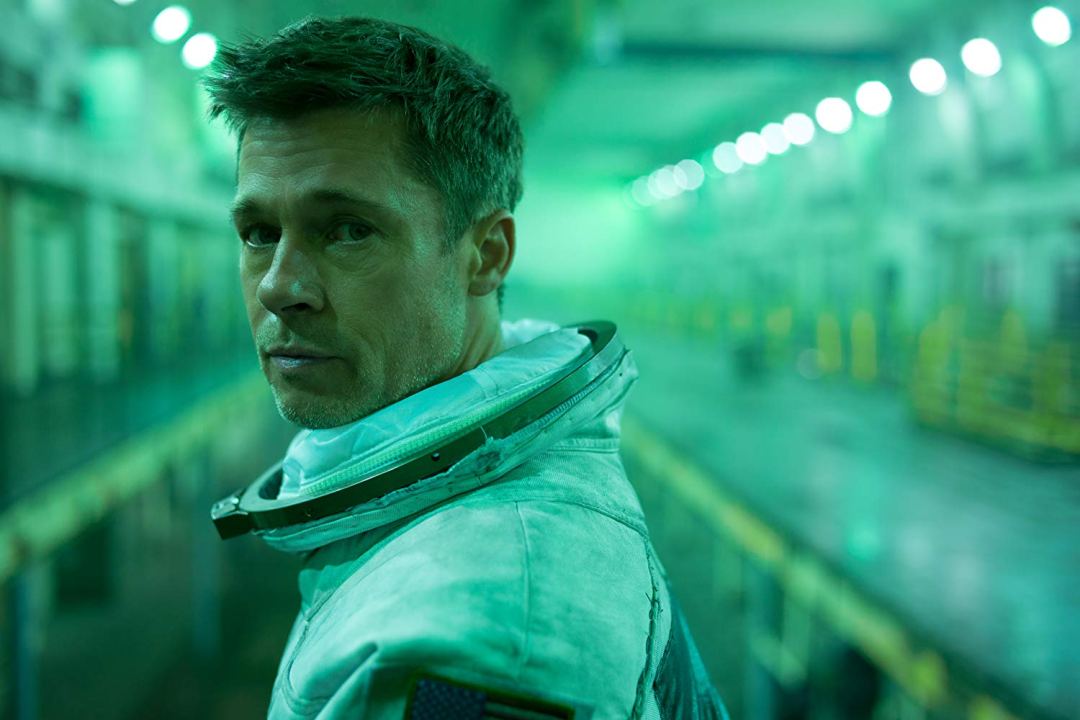

(SPOILER-FREE)
Acting: 6/10
Writing/Plot: 2/10
Directing: 4/10
Production/Effects: 9/10
In space, no one can hear you scream, and for director James Gray, that’s probably a good thing.
Ad Astra is a sci-Fi thriller that follows the epic journey of renowned Major Roy McBride in the US Military Space Division whose father upheld a Neil Armstrong-esque legacy, before ultimately being declared MIA during a deep space, top-secret mission to Neptune’s atmosphere, in search of ET life forms. Adding to the drama, there is an underlying threat to the universe that has been linked to the possibility that Roy’s father may still be alive, and Roy has been tasked with setting off on a potential suicide mission in order to save the world. Roy himself seems in a constant state of existential crisis, as the Major’s entire life has revolved around his career, which has forever been seen as no more than an extension of his father. Roy is at a constant psychological battle with himself, haunted by years of cognitive dissonance and guilt.
Despite the film being described by some as “challenging” and “moving”, it would appear that those behind the production gave zero credit to the audience in advance of releasing this film. At not one single point in the film are audiences left to consider a scenario, motivation or action, thanks to the shallow, uncreative display of writing throughout.
Without giving much away, from very early on (the opening scene, in fact) we are greeted by the film’s attempt to inject a first-person narrative of Roy’s character. Roy’s conscious is a forever-present reminder of how much this method of storytelling has failed catastrophically in blockbusters past – such as the post-production implementation of this in Bladerunner – and continues to lend little substance to the story itself.
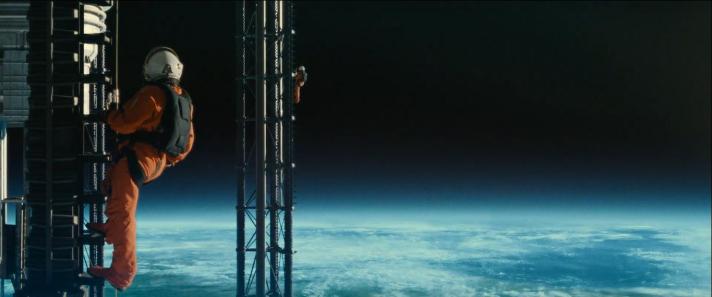
The most blatant issue with this methodology is patronising taste it leaves on an audience’s palate. At certain points throughout the film, thanks to the tremendous efforts of the cinematography team, the audio folk, the wizards behind the jaw-dropping special effects and a tense-faced Brad Pitt (for good measure), there are scenes that are truly awe-inspiring. Subtle signals and symbols presented without any dialogue at all, when identified are pleasant gems of narrative genius, which although you may not spot at first, will echo in your subconscious stronger than that of any dialogue. These efforts are squandered, however, as before the audience has time to digest a grand display of semiotic class, Roy’s voice-over swoops in with a series of lazy explanations, like those found in a poorly constructed comparative essay in a leaving certificate exam. It’s over explanatory and it’s certainly not thrilling. It is an insulting effort which less resembles a man’s internal conflict, but more an audio-description intended for those who do not possess the ability to actually watch the film with their own eyes.
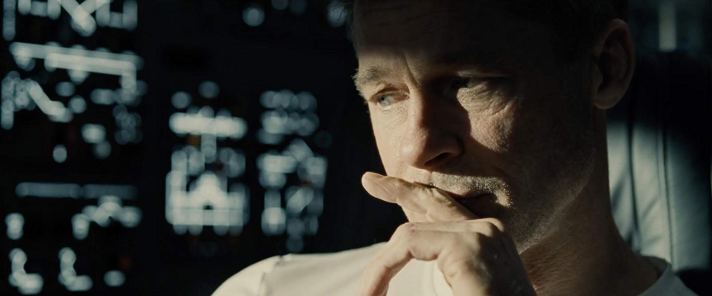
Unfortunately, it doesn’t stop there. In an attempt by Ad Astra to grasp the audience with deep, philosophical challenges, they have failed utterly to simply tell us about any of the significant characters. You will sit and watch this film for two lengthy hours, and from the first minute to the last, you will see little character development. Why? Because you’re given nothing to start with. You won’t know anything more about the main characters as you stand at the urinal trying to process the film you just sat through than you did when you were opening your popcorn and taking the first, crisp mouthful of the tangy litre of coke in the cup holder beside you and watching Brad Pitt stare dramatically into space.
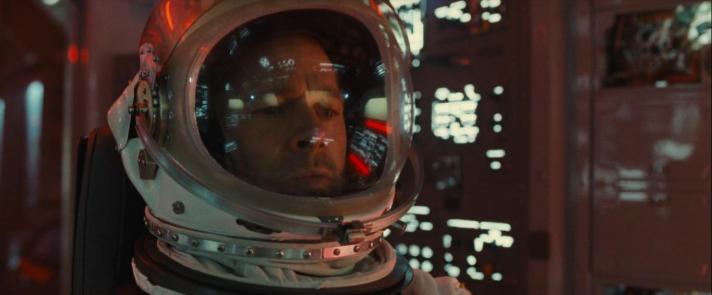
The film tries so hard to manufacture a sense of depth that it completely fails to do so at every opportunity. And I think they knew this. There are several scenes in which high-intensity action occurs, with impressive VFX and well-executed choreography making these scenes – in isolation – very captivating and exciting to watch. But that’s all they are, captivating in isolation. They fail to contribute to the story in literally any way at all and seem randomly inserted after the film was made in order to stimulate an audience that is likely already lost.
I failed miserably in my own efforts to understand the global obsession with this film. From raving reviews and grand testimonials, it would seem that the wider audience was completely sold by this film as a thrilling and emotional rollercoaster. A young woman sat next to me in the screen and it was clear very early on by her constant shuffling and time-checking that she indeed was not enjoying this film. Despite my best efforts to ignore her, I heard her at one point whisper to her friend “this is over 2 hours long… do we actually still have over an hour to get through?”, and unfortunately a part of me could not help but agree with her sentiment.
Overall, the film was very disappointing. It was like someone took Arrival (2016), Gravity (2013) and Interstellar (2014), gutted them of all their depth and fused together what little remained. The voyage to Neptune takes approximately 79 days in this film’s universe, and in all honesty, it felt like I was on board the same shuttle as Roy for the entirety of this time.

 Evan O'Gorman