*If this is your first time reading the ‘Where the Happy Folk Live’ series, it is recommended you read Part 1 first.
A lesson in military herding… Bank jobs and fat stacks… Alien invasions… A moment of unadulterated regret…
Day 2.
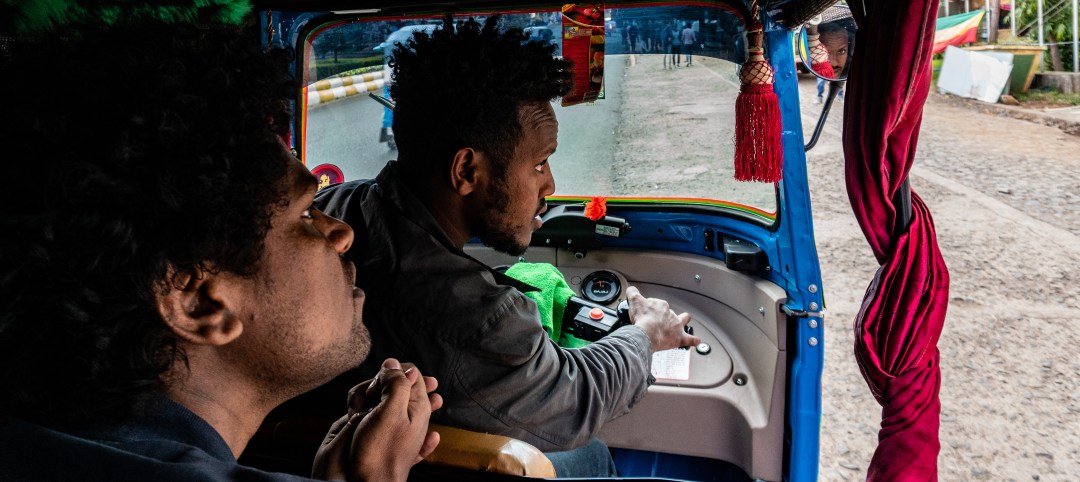
The 15 minute journey from the hotel to our airport was an overload of information. As soon as our driver left the airport grounds I slipped into a state of paralytic awe. Wide but battered concrete roads covered in large craters and scattered boulders. Hordes of people going about their daily lives covered in shawls and headscarves. Traffic chaos loomed in clusters of mules packed together on the wrong side of the road; stray sheep and cows being chased down by an enraged child bearing a stick larger than himself. Roadside dwellings formed from trees and dirt with plastic and metal sheets spread seemingly randomly – but clearly strategically. Multitudes of farm animals made their way across dual carriageways, caring little for the complaints of road users. Almost 25 million tuk tuks battled with the scattered traffic that ducked and dodged one another on what remained of flat road between the enormous potholes that even Dublin City Council would consider problematic. Never in my life had I ever seen anything like it. Of course, there have been several attempts in TV and cinema, but they never really capture the essence. Not even the documentaries do this world justice, which makes me greatly question the purpose of these very words. I felt a strange feeling. One I would feel many times throughout this visit. I was coming from one of the most advanced countries in the world to a place where iPhones were a myth, yet I felt like an Amazonian tribesmen who had just been dropped into a hot-desk in Silicon Valley.
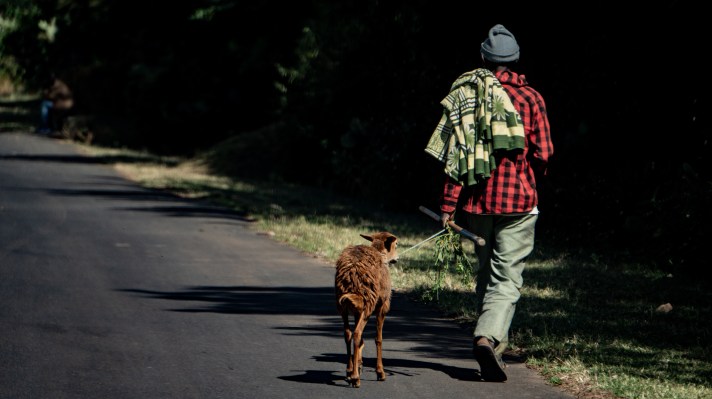
At one point, shortly after passing the impressively advanced Gonder University, I witnessed a shepherd attempting to apprehend a clearly volatile and courageous sheep. The shepherd was becoming increasingly agitated as – despite his best efforts – the flock began to become inspired by the lone rebel, and too showed signs of dissent towards their master. A nearby soldier saw the quarrel from afar and raced over to assist the desperate shepherd. Seeing a man in camouflage helping a shepherd herd sheep by waving his Kalashnikov frantically by the barrel was one of the strangest things my mind will ever have to process.
Before coming to Africa, one’s interpretation of this land would be one of great plains of desert with natural life few and far between. It’s not an ignorant assumption, as much of the continent is indeed covered in desert sandlands. However Ethiopia had just blossomed out of the rainy season and was a paradise of tropical forestry and wildlife. There was amongst it a lot of sand and rock of course, but the green and yellow fields often resembled that of Connemara on a seldom hot summer’s day.
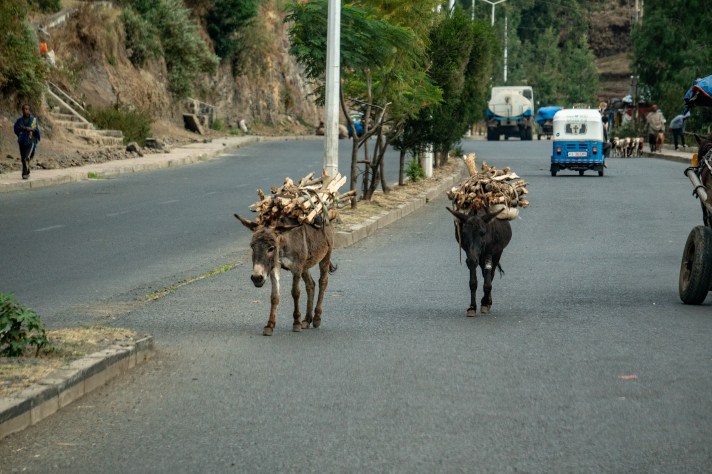
The preferred side of the road countries drive on is something that has always fascinated me for some reason or other when travelling to a new country. It gives one historical insight from such a small detail. The driver of our hotel shuttle didn’t seem to speak any English so despite riding shotgun I didn’t bother asking. I figured there was no point anyway, as it would be clear once we got onto the road. Although eventually coming to the conclusion that it was indeed the right side of the road, this was a rule taken very loosely. Throughout this brief journey, our driver spent the majority of his time playing chicken with trucks and tuk tuks. For lack of motor vehicles, he would constantly swerve in and out of oncoming herds of cattle and goats. Donkeys are used widely in Ethiopia as a means of transporting cargo and they have an uncanny knowledge of the road and maneuver very much like you would expect a vehicle to. Apart from those, the driver dodged sprinting children and j-walkers who showed little interest in his insistent honking. There were no particular or stated rules of the road here. Road lines were and signs were extremely rare and I didn’t see a traffic light until returning to Addis the following week. The idea of yielding or giving right-of-way was of such subjectivity that at many roundabouts drivers would just turn left into oncoming traffic should they be taking the last exit. The only chain of command that seemed to exist was based on the size of the vehicle. Tuk tuks were constantly beeped out of the way to the side of the road. Small cars like Yaris’ and 206s were too shunted away by larger minibuses and jeeps, where trucks and lorries ruled the roads. Farm animals were the only exception. It’s easier to alert someone with your horn than it is a stray mule. We arrived at the hotel and I immediately went for a two hour nap. The cruel combination of altitude, travel and all these new sightings had taken its toll on all of us.
The hotel was bizarre. Like nothing I had seen before. On first impressions it was a remarkably fancy and executive hotel whose clientele comprised primarily of people from other African nations who were just passing through on business. I met a man from Debark – the town we would be visiting – who was staying in the hotel on his way back home. He had spent the past 11 years working in Texas so his accent threw me. He was dressed differently than most Ethiopian professionals I had seen so far. His shirt was fitted and his tie was skinny. Another morning at breakfast I met a couple – probably in their late 50s – who were both doctors. They were sitting behind me and had overheard a conversation between Niall and I which sparked their interest. Not so much the content of the conversation, but our accents, and they guessed correctly that we were Irish. I had also been eavesdropping on their conversation and had come to the quick conclusion that they were Americans. I spent some time chatting to them about our time in Ethiopia and was trying to calculate where in America they were from. The speed in which they spoke suggested they were indeed East Coast, but there was something in the way they ended their sentences which suggested they were from the south-west, Nevada or something. It turned out they were in fact Israeli.
There would always be a collection of people down in the lobby of the hotel scattered around the couches and benches that lined the walls as that was the only location in the hotel (and possibly all of Gonder) you could get reliable Wi-Fi. The only other visitors the hotel had were the scatter of people who used the four ATM machines outside the front door and the occasional farm animal that would break free from the pack to steal some of the hotel’s grass, but was quickly apprehended by staff.
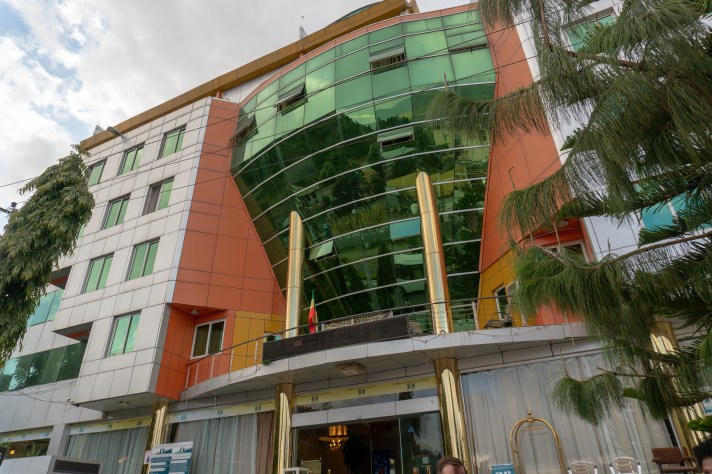
The hotel itself was like something from a film about Cuba. The exterior was designed purely for aesthetics and had no practicality in mind. Large slates of orange and grey tiles made up the mostly square shaped building, and a huge green-glass cylinder cut through the front of the building. It was like someone was given twenty seconds to draw the National Convention Centre in Dublin based off a photo they saw three weeks before. The interior was lined with white and brown tiled floors and as many tablecloths as you could imagine. Getting into the lift was a frightening experience. It was very small and very dark and made a lot of concerning noises, but upon arrival I cared little about personal safety.
My room was spacious given the price I paid for it. The double bed was draped in decorative throws made of fine materials which were pretty but completely useless. The bathroom was bigger than my own bedroom at home and had a large avocado-green jacuzzi in the corner with LED lights both inside and out. From a brief glance one would think it was all a fine bit of architecture and design, but the closer and longer you looked at it, the more the flaws began to show.
There was only one window in my room which was tucked into the corner allowing very little light to get in. What light was able to seep through was then further obscured by the large glass cylinder. Sunlight in Gonder is brighter than any light I have ever seen, but I always had to keep my bedroom light on to see anything. This design also meant that there was a gap between my window and the exterior glass, which created a void of hot, stale air. The jacuzzi features of the jacuzzi did not work, nor did the faucet. Upon closer inspection I also discovered that the electronics that would activate the jacuzzi features were not even connected to a power source, leading one to believe they had never been used. For clarity, I did not travel to the Horn of Africa to have a jacuzzi, but it the surrealism of the setup was potent. The bedroom had a reasonably large and new LG TV which had 11 channels, one of which showed a 24 hour stream of random sports with English commentary. When we arrived at 10am they were showing the Champions League games from earlier that week, but claimed they were broadcasting them live. There was also a mini fridge and a kettle, but the kettle didn’t have a switch on it and the fridge was without a plug. All things considered, the Florida International Hotel was a palace given the surrounding area, and despite not understanding a word we said, the staff were very friendly.
Just before I passed out on my bed, I was invaded by an overwhelming sense of unadulterated regret. “What the fuck am I doing here?” I said to myself. It was a moment of panic, but I was so tired that it passed by very quickly.
When I awoke, I sat in the lobby of the hotel to use what few megabytes of internet were available to check in back home. I lingered around the entrance like a bad smell where almost every passerby stopped and stared, usually smiling and almost always returning a wave or nod. There was nothing sinister about it, but you could not help feel intimidated. The interest in us peaked later that day when we arrived at the bank with the intention of exchanging money, which was only a few doors down from the hotel. We were immediately escorted past a group of locals who were queuing patiently to be seen. We were brought through to the manager’s desk, who was very excited by our presence. He spoke very good English and wore a clean, modern blue suit. We exchanged a few hundred Euros and were handed a collective 18,000 Birr, give or take, all in 100 notes, bound together with paper straps like something from a heist film.
The exchange rate is about 30 Birr to 1 Euro, but in most establishments the inflation does not translate. I would pay 25 Birr (less than 1 euro) for a beer in the hotel, which was expensive as I was a tourist. There are two prices for every product or service here. One price was for the Ethiopians and one was for non-Ethiopians. But even still, everything was very cheap. For example, late that day I bought three fresh coffees. They were so cheap that I gave the waiter 100 Birr, left a tip larger than the bill itself and spent less than three Euros.
That evening a young man called Zinabu arrived at the hotel. Elaine had been good friends with him since her relationship with Ethiopia began some nine years ago and he had been invaluable to helping her. He was Ethiopian, average build and height and wore his hair in a sort of medium-length afro. He was the type of person that, despite having just met him, I felt like I had known him for many years. He was very humble, oozing with energy and knew how Ethiopia worked, which is an indispensable trait to have. Zin was to be our guide, translator, liaison and pretty much doctor of all things Ethiopia for the coming week and a half. I was tired by the time he arrived, so we spoke very briefly and I left him with the family to catch up.
The next morning I emerged at about 7am and headed down for breakfast. The family wasn’t up yet, but I spotted Zin having breakfast with an Ethiopian man I did not recognize. He immediately gestured for me to join them, so I did. He introduced his friend as someone he went to college with in Gonder several years ago and the three of us spoke about politics and such, with Zin translating for his friend and I. He helped me buy an Ethiopian sim card and while he and the rest of the family headed off to visit local missionaries who were involved in the adoption process, I headed back up to my room for a well needed bath.
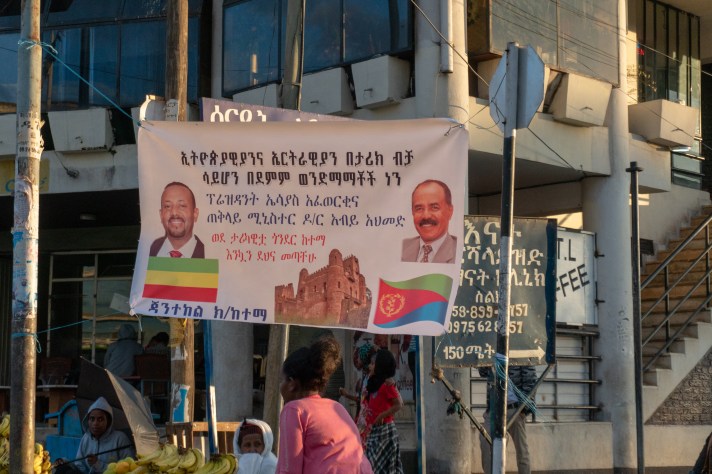
From the bath I noticed a distant sound of chanting and cheering going on, followed shortly by a precession of about 100 people of all ages making their way down the main street outside the hotel, all branding Ethiopian flags and banners and large print outs of the recently elected Prime Minister. This was likely provoked by PM’s visit to Gonder that day to meet with the president of Eritrea. Both countries had been engaged in a brutal bloody war for almost 20 years and he was being hailed as the man who brought peace. It had started in 1998 – less than a decade after Eritrea declared independence from Ethiopia – when tensions along the newly formed border reached a boiling point. Badme, a town on the border between the two nations, was highly contested by both sides, and in 1998 full scale war broke out following a series of assassinations and skirmishes along the border. At the time, Eritrea and Ethiopia were two of the poorest countries in the world; however the outbreak of war triggered massive spending on military equipment despite both countries’ populations being plagued with famine. The war lasted about 12 years, in which casualties of about 70-100 thousand were estimated. The following eight years were less bloody, but a cold war presented equal problems for both sides. Several peace plans and agreements were signed and issued, but few were concrete and getting both sides to agree on border terms was almost impossible. What made matters worse was that in 2005, United Nations peacekeepers were pulled out on the premise that both countries were on the verge of peace. It’s unclear what provoked it, ultimately it depends who you ask, but shortly after this talks broke down and tensions at the newly agreed border sparked off yet again. In June of this year, just five months before our visit, the newly elected PM announced that Ethiopia would agree to the treaty formed in 2000 and return the contested land to Eritrea. This was a massively progressive move by the PM, whose predecessors had suffered greatly from political corruption. With this, the two leaders signed a Joint Declaration of Peace and Friendship, officially ending the conflict. For the first time in about twenty years, flights continued between the two countries and families who were separated by the border were reunited. The Ethiopians of Amhara were greatly in favour of this, which was seen by their overwhelming and sometimes concerning support for the man. They worshiped him, and his face could be seen on the back of every tuk tuk, hanging over the reception of every business and printed on cheap wallets and T-shirts at stalls from Addis to Debark. I feared this obsession, but that is something we will get onto later.
Not wanting to miss any other oddities, I sat outside the front of the hotel, just in from the street, on a badly damaged wicker chair under a palm tree. Trucks held together with bungee cords boomed by as if their brakes had been sold for scrap metal, men and sometimes children would sit on top of the cabin without a care for their own safety. Strange wooden stalls littered the sides of the road made up of about five eucalyptus branches all held together with string, on which people would take turns sitting. Everything was a mystery to me and I loved it.
The sun was blazing so I was wearing a pair of navy shorts and a navy t-shirt, with my obnoxious red hair out on view. This drew quite a lot of attention in the hour I sat there writing and drinking. There was a constant flow of people using the ATMs, all very interested and perplexed by the sight of this pasty ginger stranger. There was another seat beside me, in which people took turns sitting. This was quite an unusual experience. Men, women and children would come and sit in the chair which was about 5 o’clock to me, not directly in sight to but shallow enough in my peripheral to notice them. They would come and sit and stare into the side of my skull in silence for many minutes at a time, before returning to their business. The hotel’s concierge was a feeble looking man who wore a dirty black suit about five sizes too big for him, but constantly smiled and greeted you with a friendly Salam. He approached me from my right, greeted me, and just stood there – a matter of millimeters away. He was motionless, and although very uncomfortable I continued to write in silence for the amusement of this man. He stood over me staring in bewilderment at my writing for about 10 minutes, before being called to duty.
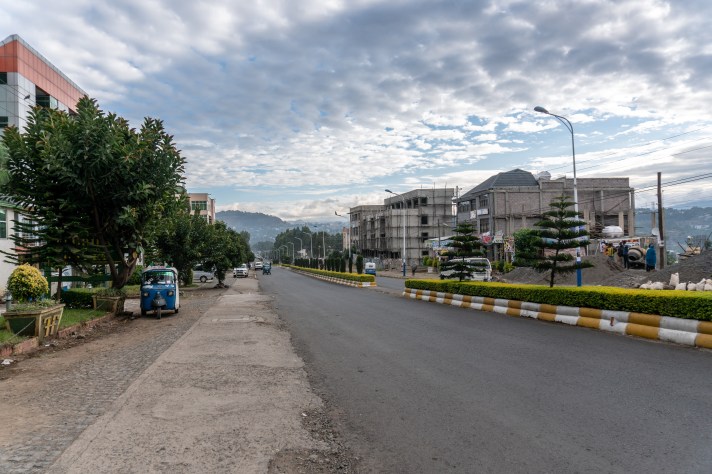
Once the family returned with Zin we ate lunch in the hotel lobby and planned out the evening. Tomorrow we would be travelling to Debark very early in the morning, but since we planned visiting a school later in the week Elaine and Niall wanted to buy a load of stationary with money that had been donated to them. That wouldn’t have been possible to do in Debark, but Zin knew there would be plenty of places to choose from in Gonder. As the sun began to set on the surrounding valley, we loaded up into two tuk tuks. Zin, Niall and I crammed into one while Elaine and the two boys went in another. It was the first time getting to see the centre of Gonder up close, as the shuttle from the airport bypassed a lot of the city. The streets were wild and loud as dusk was in full swing. There was a constant humming of 150cc engines, car horns and chatter. Amongst it you could often hear the sounds of whistles by local police desperately trying to control traffic that had no system or reason at all. People hung around dilapidated doorways and under makeshift shelters, standing almost like a small tree watching as the world before them tossed and turned. This was a common sight throughout Ethiopia. Their huts were thrown together hastily with rotting cast iron and plastic with strained sticks offering what little support they could. There were also a lot of shipping containers scattered around the outskirts of the city, which I later learned that people and their families would live in. It was a lot to take in as we traversed the city in which I never managed to get a bearing of.
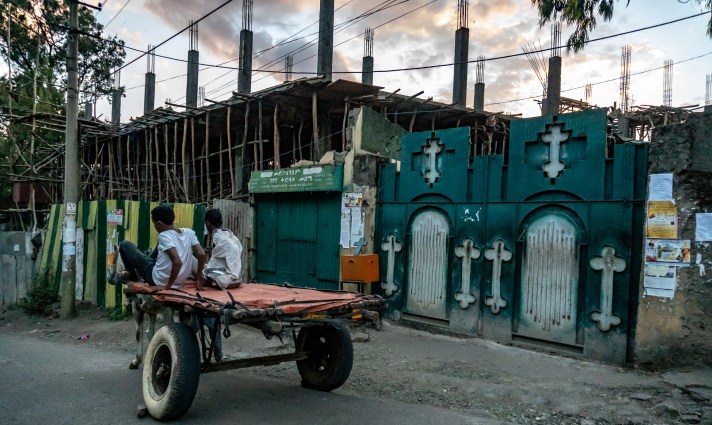
Zin went into the stationary shop with one of the drivers, knowing that the prices would be a lot lower should they buy it and not us. Our driver lingered between our tuk tuk and the other, making sure we were okay. We were sat there for quite some time and Niall and I shared our observations. Although mostly masked by the curtain on the tuk tuk, passersby on the street – which was teeming with people at this hour of the evening – would often notice us, taking a moment to process our presence. At one point a young girl – no more than 7 but likely about 13 – approached us and ask for a Birr. I thought to myself a mere three cent (in Euro) will have next to no impact on me and has the potential to benefit this girl greatly. She was wearing a dirty, torn shawl and a dress that, although tiny itself, hung like a dying leaf in autumn from her weak and bony torso. Her hair was cut so short that, if not for the dress, her gender would not have been clear. She took the Birr and continued down the busy street. Although it seems like a nice gesture, I then learned the consequence of doing so. Sure, the value of that coin to me is minuscule, but word in this world travels like a blazing and thunderous firestorm in the American Midwest. The children here have no phones and social media is non-existent, but once word of a tourist on the main street is giving out money, you can expect a hoard of charming children to emerge from the alleys and the shadows. It was not something I had considered before, but thankfully our driver was there to fend off any children that came after.
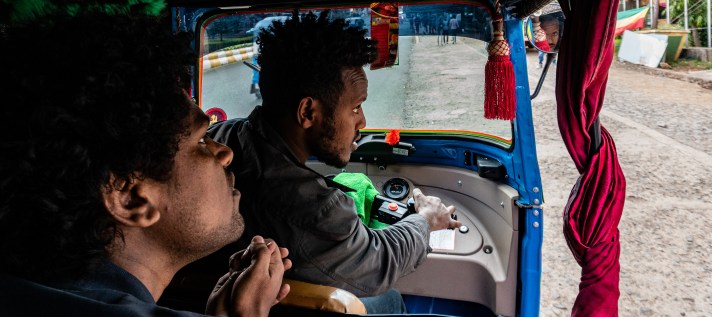
Our driver was a young man – about my age – who was very well dressed and groomed, at local trait which I will always carry huge admiration. They lived in conditions unimaginable to ourselves, but were always incredibly well kept. I called him ‘Twenty’ because despite my best efforts I could not pronounce his name. He told me he was 20 years old, so I settled on that. Once Zin and co. acquired the stationary the drivers took the six of us to a very popular tourist restaurant one the edge of town called ‘The Four Sisters.’ At this stage it was very dark and the only thing that lit the streets were the headlights of the tuk tuks and the occasional camp fire on the corner of the street that gave respite to those in need. Gonder was warm for the most part and after sundown it would remain mild but noticeably colder.
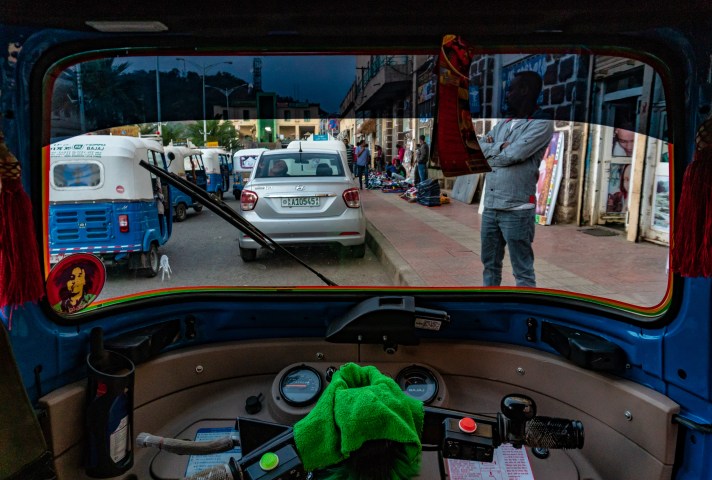
As you make your way out of the city you see more and more of the shanty town houses and clear signs of poverty. Wild packs of dogs would loiter on street corner like dealers. Families would be seen through doorways huddled around a room no larger than an old Datsun. The blinding darkness on the street was ever present as we pulled up to the restaurant. We were greeted by an exceptionally tall man with a long black coat and a hood. I didn’t notice him until he was standing right next to me and starting playing a delicate tune from the traditional Ethiopian horn. In truth, he scared the ever-loving shit out of me. “Jesus!” I shouted, much to the amusement of everyone there. As we walked into the restaurant, another man stood in the corner wearing traditional coloured clothes. He carried a single stringed guitar-like instrument that had a cube shaped body and was played with a curved bow like a cello. It produced a sound I was not familiar with and am still unsure of. The restaurant was mainly occupied by tourists with some obvious American, British and Mediterranean accents. I had two rounds of a buffet that served a mix of traditional and European food, but I opted for the traditional selection. If I was going to understand this world, I had better eat the food.
Food was somewhat of a concern before coming to Ethiopia. Anyone who knows me will tell you that I’ll eat pretty much anything and in large quantities, but the lack of apparent food hygiene and any structured regulation worried me. This is something you just have to accept when you visit here. The food is nicer than anything you would get at home, but there is always a substantial risk of food poisoning. Vegetarians and vegans would not last here, nor would those overly preoccupied with hygiene. If you wanted to be picky, you’d starve to death pretty quick, so you’re better off just accepting this and embracing it.
Finishing up our meal, we headed back towards the hotel where we stopped for a beer at a local bar that was hosting a traditional dance group. We didn’t stay long as we were up early, but it gave us time to process that day. I recalled the conversation Niall and I had in the tuk-tuk when we waiting for Zin to return and attempted to hide from young children. Here we were, the epitome of an extraterrestrial. No understanding of the language, the culture, the people. Yes, there’s no doubt they were welcoming to us, but the culture did not demand they go out of their way to make us feel at home. We were visitors, just passing through. Given the population, life expectancy and brief but close encounter with us, it was fair to say these people would never see us again. They have more to concern themselves with, and seeing the lives they live, I do not for a second blame them. You don’t quite feel like you’re intruding per say, but there is no hope of ever integrating. You can move from one place in Europe to another – even America – and over time you will become more local than the locals themselves. But that was not the case here. No amount of time spent living here could ever give you full integration. We were utterly different, and that was that.
I knew we would be returning to Gonder for a night after Debark, so I wasn’t too disappointed not to have seen more. I had been told that if I found Gonder crazy, Debark would tip me right over the edge of reality. I wasn’t sure if I was ready for more, but we would be leaving for Debark at 7:30am, so I didn’t have much of a choice.
Part 3 of ‘Where the Happy Folk Live’ will be available on Wednesday week, January 2nd.

 Evan O'Gorman
Evan O’Gorman thank you for bringing Gondar to life and yes Elaine it wouldn’t appear to have changed much in 50 years!
LikeLiked by 1 person